

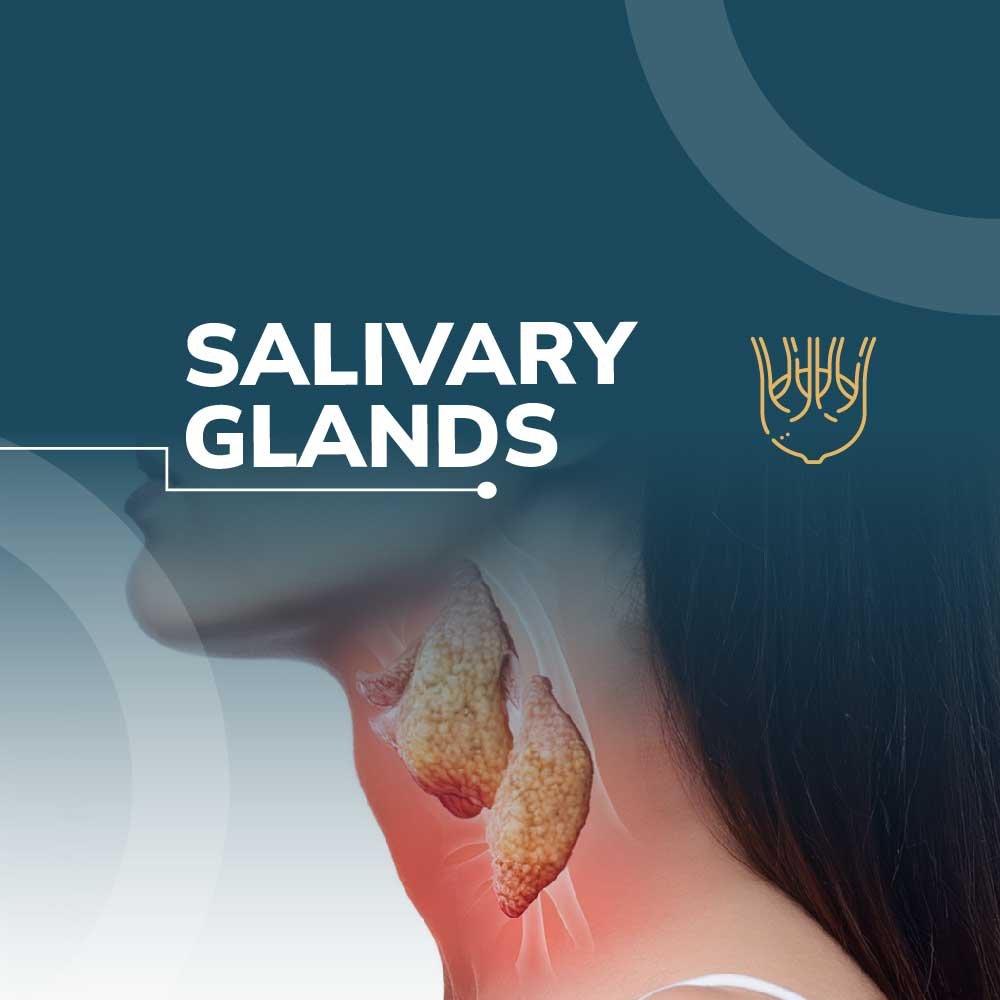
Salivary glands
The major salivary glands, which are the parotid glands (located on either side of the face in front of the ears) and the submandibular glands (located under the jaw), are responsible for producing saliva for the digestion of food. However, there are also multiple minor salivary glands distributed throughout the mouth that perform the same function.
The main diseases affecting the salivary glands are:
a) Infections
b) Inflammation
c) Tumors
d) Stones
Tumors can be benign or malignant, with most being benign. They usually appear after the age of 40. The most common symptoms are: appearance of a rapidly growing mass, pain, changes in facial movements (similar to the effects of facial paralysis), changes in the skin of the parotid region, and hearing changes. All of these masses are treated with surgery.
Inflammation of the glands, also called adenitis, is a condition of unknown cause that is often associated with other diseases. The main symptom is a diffuse increase in the size of the gland without any identifiable masses. Some types of inflammation correspond to sialosis, which is an increase in the size of the glands that is not painful and is associated with diseases such as cirrhosis, diabetes, and bulimia. Chronic recurrent sialadenitis corresponds to episodic and repetitive inflammation of one or more glands that usually occurs in young people. Sjogren's disease is bilateral inflammation of the glands resulting from the body's reaction against its own salivary glands. Most of these diseases are treated conservatively, and surgery is only necessary in very select cases.
Other causes
Calculi are hard formations (similar to kidney or gallbladder stones) that occur inside the ducts of the gland and obstruct the flow of saliva. The main symptoms are inflammation of the gland related to meals, pain when eating, and saliva containing stones or pus. This can trigger an infection and eventually destroy the gland. Depending on the size and location of the stone, it may be possible to remove it, or it may be necessary to remove the entire gland.
Infections can occur in an ascending manner through the salivary ducts in patients with diabetes, immunosuppression, or due to radiation or obstruction of the salivary ducts. Viral infections such as viral parotitis (mumps) and in some patients with HIV infection may also occur. The most common symptoms are inflammation associated with fever, pain, redness, and pus discharge through the gland's drainage hole. Most cases are treated with antibiotics. If episodes recur or an obstructive cause is found to explain the symptoms, surgery is necessary.