
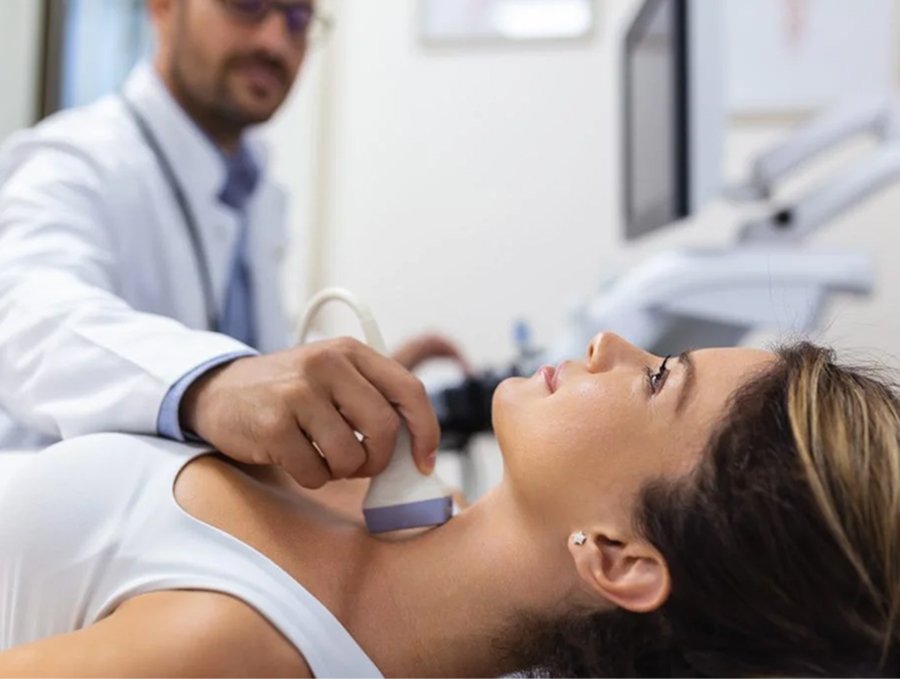
A thyroid biopsy is a procedure designed to analyze thyroid nodular tissue and extract a small cell sample in order to identify the presence of cancer, infections, or other thyroid-related disorders.
Fine needle biopsy:
A doctor uses a thin needle to access the thyroid gland. This biopsy technique is often preferred by many specialists over surgical procedures.
Open biopsy:
It involves making an incision in the skin to visually access the thyroid gland. This method is used when other tests have not provided a clear cause for the symptoms.
Core needle biopsy:
A special needle is inserted to extract a tissue sample similar in size to a grain of rice.
The purpose of a thyroid biopsy is to identify the cause of a lump or nodule detected in the thyroid, either during a physical examination or through tests such as ultrasound or thyroid scintigraphy, and to determine the cause of an enlarged thyroid (goiter), characterized by problems swallowing or breathing, a feeling of swelling in the neck, and weight loss.
Preparation for the procedure:
Before the biopsy, it is important to inform your doctor about:
- Any medication taken regularly, including names and dosages.
- Allergies to medications, especially anesthetics.
- Use of medications to prevent clots or history of bleeding problems.
- Blood tests may be performed to check for clotting problems before a thyroid biopsy.
Steps prior to the procedure:
- No specific preparation steps are required for a needle biopsy. The patient will be awake during the procedure.
- In the case of an open biopsy, general anesthesia will be administered and the patient will be asleep. Precise instructions regarding fasting before the procedure must be followed, and if medication must be taken on the day of the procedure, it should only be taken with a sip of water.
- Before the test, it is necessary to remove dentures (if worn) and any jewelry or metal objects around the neck and upper body.
Procedure development:
Puncture biopsy:
It is performed in a hospital, clinic, or doctor's office. During the procedure, the patient will lie down with their head tilted back and their neck extended to facilitate the biopsy. It is essential to avoid coughing, talking, or swallowing while the needle is in place. The procedure takes approximately 5 to 10 minutes.
Before the biopsy, a sedative may be administered to relax the patient. The doctor will clean the skin over the thyroid with a special soap.
The doctor may use ultrasound to guide the placement of the needle, removing a small amount of thyroid tissue and fluid for examination under a microscope. A small bandage is placed over the needle insertion site.
Open biopsy:
Performed by a surgeon in an operating room when other tests have failed to identify the cause of the symptoms. The procedure takes approximately one hour.
A sedative may be administered to relax the patient. An intravenous line is placed in the arm to administer medications and fluids. The patient will be asleep during the biopsy.
The skin over the thyroid is cleaned with a special soap. An incision is made in the neck to take a sample of thyroid tissue or, in some cases, to remove the suspicious lump. Some of the tissue may be sent to a laboratory to be examined for cancer cells. If cancer cells are found, the doctor may choose to remove more or all of the thyroid.
The incision is closed with stitches and a bandage is placed over them. It is recommended to keep the biopsy site covered and dry for 48 hours. It is normal to expect slight bleeding from the biopsy site, so it is important to consult your doctor about the expected amount. Some people may need to stay in the hospital overnight.
The open biopsy procedure is not performed as frequently as the needle biopsy procedure.
Sensations during and after the procedure:
Puncture biopsy:
It can be uncomfortable to remain motionless with your head tilted back.
During the needle biopsy, you may feel a quick prick in your neck.
The biopsy site may feel sore and tender for 1 or 2 days. Over-the-counter pain relievers, such as acetaminophen, can be taken to relieve discomfort, following the directions on the label.
Open biopsy:
The patient will be asleep and will not feel anything during the biopsy. After the procedure, nausea, general muscle pain, and fatigue may be experienced for 1 or 2 days. There may also be a sore throat and hoarseness. To relieve a sore throat, hard candy can be sucked or warm salt water can be gargled.
The biopsy site may feel sore and tender for 3 to 4 days. Your doctor may prescribe pain medication for this.
After undergoing a thyroid biopsy, it is advisable to rest your head on a pillow when lying down for greater comfort. When getting up, support the back of your head and neck with both hands to avoid discomfort at the biopsy site.
Associated risks:
There is a small chance of complications from a thyroid biopsy, such as infection or bleeding.
After the test:
It is crucial to contact your doctor immediately if you experience:
- Significant bleeding that soaks through the bandage.
- Difficulty swallowing.
Signs of infection, such as:
- Increased pain, swelling, warmth, or redness around the biopsy site.
- Red veins extending from the biopsy site.
- Pus discharge from the biopsy site.
- Appearance of swollen lymph nodes in the neck.
- Presence of fever.
Thyroid biopsy results:
Normal: The thyroid tissue analyzed shows a normal condition.
Abnormal: The sample reveals a thyroid-related condition, such as inflammation, cancer, or a noncancerous (benign) tumor. A thyroid cyst is identified during the biopsy. Most thyroid cysts are not cancerous.